Self-cleaning solar façades

Solar glass only powers a building while it is clean. IKU Windows keeps photovoltaic glass in the façade and its shading clean at the touch of a button, so it keeps producing the energy the building was designed to generate.

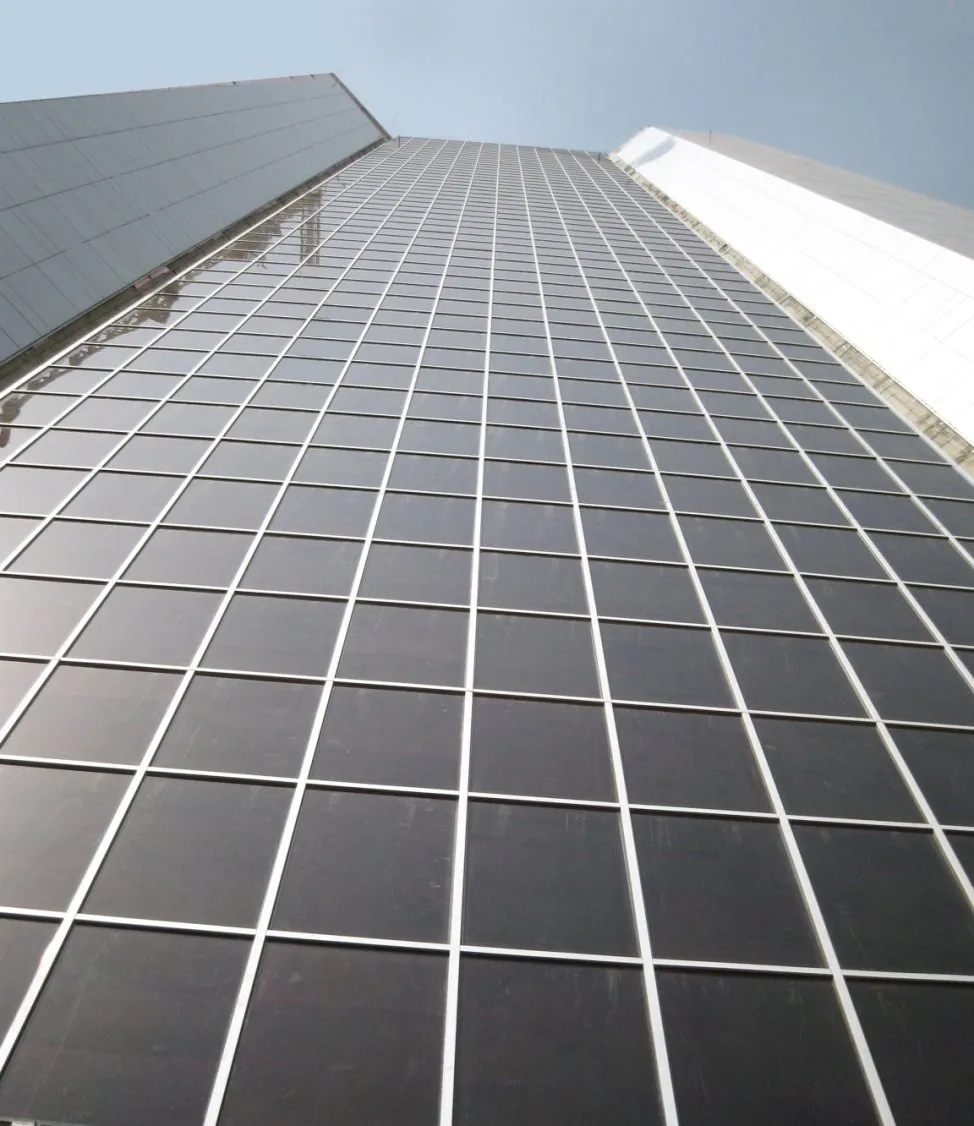
Looking up a façade of photovoltaic glass panels

Why solar glass has to stay clean

Buildings are becoming power stations. Photovoltaic glass now forms façades, canopies, skylights and shading, and the building counts on the energy it produces.

Dust, sand and city pollution block sunlight before it reaches the cells. On flat and tilted glass the loss is measurable within months, and in hot, dusty climates it builds up fastest. The higher and harder to reach the glass, the less often it is cleaned by hand.

IKU Windows builds the cleaning into the façade. Wipers and spray profiles clean the solar glass on a schedule, at the touch of a button, or automatically when humidity and rain sensors call for it.

  • 10.8% Average yearly output lost to dust on horizontal building-integrated PV in Dubai Vertical façade modules in the same study lost under 1%: dust settles on flat and tilted glass.
  • Up to 16% Output lost to soiling on tilted PV modules in a polluted city atmosphere 16.2% at a 23° tilt, 14.1% at 33° and 11.6% at 43°.

Where dirt costs the most power

Dust settles on flat and tilted glass far more than on vertical glass. A year-long study in Dubai measured about 10.8% lost on horizontal building-integrated PV against under 1% on vertical façade modules.

  • Canopies and atrium roofs

    Flat and shallow glass collects dust, sand and pollution fastest, and is the hardest to reach.

  • Skylights and sloped glazing

    Tilted glass faces the sun best and loses the most to dirt. Studies record losses of 11 to 16% on tilted modules.

  • Louvres and shading fins

    Solar fins shade the building and generate power. IKU Windows cleans behind and between them.

  • Vertical façade glass

    Sheds dust better, but still needs cleaning to stay clear, safe and productive, without cradles at height.

Greener building rules are driving solar glass

Regulators are asking new buildings to generate their own clean energy, which puts more solar glass on more buildings.

  • European Union

    All new buildings must be zero-emission from 2030, and new public buildings from 2028. Solar installations are being phased in on new buildings, starting with public and non-residential buildings from the end of 2026 and reaching new homes by the end of 2029.

  • United Kingdom

    In June 2025 the UK government confirmed the Future Homes Standard will require solar panels on new homes in England.

  • Gulf states

    Dubai's Al Sa'fat green building system and Saudi Arabia's Mostadam rating reward on-site renewable energy, in some of the dustiest conditions solar glass faces.

How IKU Windows keeps solar glass producing

  • Cleans photovoltaic and solar glass in the façade the same way as ordinary glazing.
  • Reaches glass behind and between shading fins and decorative elements.
  • Runs at the touch of a button, on a schedule, or automatically from humidity and rain sensors.
  • Integrates with the building management system.
  • No cradles, rope access or BMU, and nobody working at height.

See the façade systems

Photovoltaic glass panels on a building façade, seen from below

Questions and answers

Does dirt reduce the output of solar glass on buildings?

Yes, especially on flat and tilted glass. A year-long study in Dubai found horizontal building-integrated PV lost about 10.8% of its output to dust, while vertical façade modules lost under 1%.

Which parts of a building need their solar glass cleaned most?

Canopies, skylights, atrium roofs, sloped glazing, louvres and shading fins. Dust and pollution settle on these surfaces, and they are often the hardest to reach safely.

Can IKU Windows clean photovoltaic glass?

Yes. IKU Windows cleans photovoltaic and solar glass built into the façade in the same way as ordinary glazing, at the touch of a button or automatically when sensors call for it.

Why are more buildings using solar glass?

Building rules are tightening. In the EU all new buildings must be zero-emission from 2030, with solar installations phased in on new buildings from the end of 2026, and England is requiring solar panels on new homes.

Planning a solar façade?

Tell us about the building and its solar glass, and we will show you how IKU Windows keeps it clean and producing.

Or write to wayneg@iku-firetech.com directly.